
Root Canal Cost in Mexico: 2025 Price Guide (Save 70%)
Table of Contents
Facing a potential root canal can be stressful, and the high cost of dental care in the US only adds to the anxiety. This guide reveals how you can save 70% or more on your root canal treatment by traveling to Mexico.
We'll provide a detailed cost breakdown, compare prices in top dental tourism cities, and walk you through planning your trip for affordable, high-quality dental care.
Root Canal Cost in Mexico vs. The US: A Direct Price Comparison
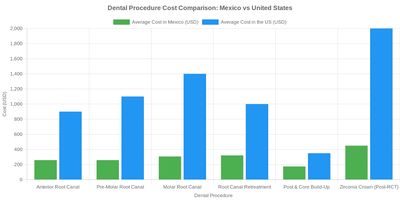
The numbers speak for themselves when you compare what Americans pay at home versus what they spend south of the border.
Looking at the price differences, you'll see why thousands of patients cross into Mexico for their dental procedures each year.
Complete Root Canal Treatment Cost Comparison Table
| Procedure | Average Cost in Mexico (USD) | Average Cost in the US (USD) | Savings |
|---|---|---|---|
| Anterior Root Canal | $168 - $350 | $900+ | ~70% |
| Pre-Molar Root Canal | $168 - $350 | $1,100+ | ~75% |
| Molar Root Canal | $168 - $446 | $1,400+ | ~75% |
| Root Canal Retreatment | $196 - $446 | $1,000+ | ~65% |
| Post & Core Build-Up | $100 - $250 | $350+ | ~60% |
| Zirconia Crown (Post-RCT) | $350 - $550 | $2,000+ | ~78% |
These savings become even more dramatic when you look at complete treatment plans.
Total Cost Scenario: Root Canal + Crown
Most patients need more than just the root canal itself. After the procedure, your tooth becomes brittle and requires a permanent crown to prevent fracture.
Here's what the complete treatment looks like:
Cost in Mexico: $700 - $900 total (typically $350 for a molar root canal plus $350-$550 for a high-quality crown).
Cost in the US: $4,500+ (around $1,400 for the molar root canal procedure plus $3,100 for a crown).
Think about that for a moment. You could save over $3,600 on a single tooth. Even after accounting for travel expenses, the savings are substantial enough to make the trip worthwhile.
A Detailed Cost Breakdown for Root Canal Treatment in Mexico
Now let's break down the specific dental costs in Mexico you'll encounter based on where you go and what type of treatment you need.
Average Root Canal Cost by City
Location matters when it comes to pricing. Border towns, particularly Tijuana, tend to offer the most competitive rates due to high patient volume and intense competition among clinics.
| City/Location | Root Canal Cost (USD) | Retreatment (USD) | Root Canal + Crown (USD) |
|---|---|---|---|
| Tijuana | $300 - $600 | Not specified | $700 - $900 |
| Cancun | $350 (per tooth) | $400 | $800 |
| Los Algodones (Border) | $168 - $446 (molar max) | $196 - $446 | $490 - $1,300 |
| General Mexico | $100 - $446 (depending on tooth) | $196 - $446 | $700 - $900 |
Los Algodones dentist prices, known as "Molar City," often provide the lowest rates because of its proximity to the border and exceptionally high concentration of dental practices.
Cost of Additional Dental Work: Posts, Cores, and the Dental Crown
Understanding what happens after your root canal helps you budget properly for the complete restoration.
Post-Treatment Necessity:
Your tooth structure weakens after endodontic treatment. Without proper support and protection, the tooth can crack or break when you chew. That's why virtually all root canals require a permanent restoration.
Post & Core Build-Up:
This step provides structural support for a crown when significant tooth structure is lost during the root canal or from previous decay.
- Purpose: To rebuild the tooth foundation and give the crown something solid to attach to.
- Cost in Mexico: $100 - $250.
- US Equivalent: $350+.
A crown is a cap that covers your entire tooth, protecting it from fracture and restoring full function.
- Purpose: To cap and protect the treated tooth while restoring its appearance and chewing ability.
- Cost in Mexico: $350 - $550 for premium materials like Zirconia or E-Max.
- US Equivalent: $2,000+.
Many patients choose zirconia crowns because they combine strength with natural appearance and long-term durability.
What Factors Affect the Final Cost of a Root Canal?
Several variables influence your final bill. Understanding these helps you get accurate quotes from clinics.
Tooth Type:
Front teeth (anterior) have a single root canal and are simpler to treat. Molars typically have three or four canals, making the procedure more complex and time-consuming. This complexity explains why molar treatments cost more.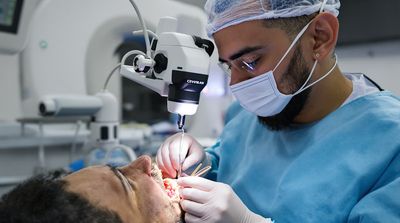
Treatment Complexity:
A standard first-time procedure costs less than retreatment. If you had a root canal years ago that failed or became reinfected, the retreatment requires removing old filling material and navigating previously worked canals.
Diagnostic Imaging:
Modern dentists in Mexico use advanced imaging to plan your treatment accurately.
- Panoramic X-ray: $20 - $100 for a complete view of your teeth and jaw.
- CBCT/3D Scan: $61 - $150 for complex cases requiring detailed three-dimensional imaging.
Sedation Options:
Most patients feel comfortable with standard local anesthesia. However, anxious patients can opt for IV sedation, which adds $500 - $800 to the total cost.
Why is Dental Work in Mexico So Affordable?
Lower prices don't mean lower quality. The savings come from fundamental economic differences, not cutting corners on care.
1. Lower Cost of Living and Operating Expenses
Mexico's economy operates at a different scale than the United States. This creates genuine savings that clinics can pass along to patients.
Reduced Business Costs:
Dentists in Mexico pay significantly less for essential business expenses:
- Office rent and utilities run a fraction of US costs.
- Staff salaries for dental assistants, hygienists, and administrative personnel are lower due to the local cost of living.
- Laboratory fees for creating crowns and other restorations cost substantially less.
Education Debt:
This factor might surprise you. Many Mexican dentists graduate with minimal or no student loan debt thanks to government-subsidized education programs. Compare that to US dentists who average $300,000 in educational debt. Without crushing loan payments, Mexican dentists can charge fair market rates while still earning a good living.
2. High Competition Among Mexican Dental Clinics
Market forces work in your favor at major dental tourism destinations.
Market Dynamics:
Tijuana and Los Algodones pack hundreds of dental clinics into small geographic areas. This concentration creates intense competition for patients.
Patient Volume:
These border cities see thousands of US and Canadian patients daily. The high volume allows clinics to operate efficiently while maintaining competitive pricing.
Benefit to Patients:
Competition drives clinics to differentiate themselves through quality service, modern technology, and attractive pricing. To stay in business, they must deliver excellent results. This means you benefit from better value for your dental care.

The Root Canal Procedure in Mexico: What to Expect
Knowing what happens during treatment helps reduce anxiety and sets realistic expectations.
The Endodontic Treatment Process: Step-by-Step
A root canal is a dental procedure that treats infection at the center of your tooth, eliminating pain while saving your natural teeth from extraction.
Here's how the process unfolds:
Step 1: Anesthesia and Access:
Your dentist completely numbs the area with local anesthesia. Once you're comfortable, they create a small opening in the tooth's crown to access the infected pulp chamber.
Step 2: Cleaning the Canals:
Using specialized instruments, the dentist removes infected or inflamed pulp tissue. They carefully clean and disinfect the inside of each canal, removing bacteria and debris.
Step 3: Filling and Sealing:
The cleaned canals are filled with a rubber-like material called gutta-percha, which seals the space and prevents future infection. A temporary filling closes the access opening.
Step 4: Restoration:
During a follow-up visit, your dentist removes the temporary filling and places a permanent crown. Some clinics can complete this step on the same day if conditions allow.
Getting a Root Canal: Recovery and Aftercare
The procedure itself is straightforward, and recovery is typically smooth.
Procedure Duration:
A single root canal typically takes 30-60 minutes, though many clinics schedule 1-2 hours to ensure unhurried, thorough work.
Pain Management:
Despite its reputation, the root canal procedure itself is painless due to effective local anesthesia. You might feel pressure but not pain. Post-procedure tenderness is normal and usually manageable with over-the-counter pain medication for a few days.
Aftercare Tips:
Following these simple guidelines helps ensure proper healing:
- Stick to soft foods for the first week after treatment.
- Avoid smoking and alcohol for 1-2 weeks to promote healing.
- Chew on the opposite side of your mouth until the permanent crown is placed.
- Take any prescribed antibiotics exactly as directed.
Most patients return to normal activities the next day.
Root Canal vs. Extraction and a Dental Implant
Preserving your natural tooth should be the first choice whenever possible.
Success Rate:
Root canal treatment has a high success rate of 93-95%. With proper care and a quality crown, the restored tooth can last a lifetime.
Comparison to an Implant:
While dental implants are excellent solutions for missing teeth, they come with tradeoffs:
- Cost: An extraction and implant typically costs three times more than a root canal and crown.
- Invasiveness: A root canal is less invasive with a shorter recovery period. Implants require surgery and months of healing time.
- Preservation: Keeping your natural tooth maintains your jaw bone and preserves your natural bite.
When an Implant is Better:
If the tooth is too damaged to save or has severe bone loss, an implant becomes the preferred solution. Your dentist will honestly assess whether your tooth is salvageable.
Planning Your Dental Tourism in Mexico Trip
Smart planning ensures you find quality care and have a smooth experience.
Finding the Right Dental Clinic for Your Root Canal
Choosing the right clinic makes all the difference in your outcome and satisfaction.
Look for Specialists:
An Endodontist is a root canal specialist with advanced training beyond dental school. These specialists have the expertise and equipment to handle complex cases with higher success rates.
Check for Advanced Technology:
Top clinics invest in modern equipment that improves outcomes:
- Endodontic microscopes allow precise visualization inside tiny canals.
- CBCT scanners provide accurate 3D imaging for treatment planning.
- Rotary endodontic instruments clean canals more thoroughly and efficiently.
Read Patient Reviews:
Look for recent reviews that discuss communication, professionalism, and the quality of the dental work. Pay attention to how clinics respond to complaints.
Ask About Warranties:
Reputable clinics stand behind their work with 5-10 year warranties on major procedures like crowns. This demonstrates confidence in their quality and provides you with peace of mind.
How Long Does It Take to Get a Root Canal in Mexico?
Treatment timelines vary based on your specific situation.
Simple Cases:
If there's no severe infection or complications, many clinics can complete your root canal and crown preparation in a single day. This allows you to return home quickly.
Complex Cases:
When an active infection is present, your dentist may treat the infection first, prescribe antibiotics, and have you return for crown placement once the area has healed. Plan for a stay of up to two weeks for the complete restoration process in these situations.
Some patients make two separate trips, while others stay in Mexico for the duration. According to Delta Dental, planning ahead helps you understand your timeline and make appropriate arrangements.
Payment and Dental Insurance Options
Understanding payment logistics prevents surprises and helps you budget effectively.
Payment Methods:
Most clinics accept multiple payment options including USD cash, credit and debit cards, and wire transfers. Always confirm accepted payment methods when requesting your quote.
Dental Insurance:
While most Mexican clinics don't directly bill US insurance companies, they will provide you with all necessary paperwork to file for reimbursement yourself. Some US insurance plans may cover a portion of out-of-country care. Contact your insurance provider before traveling to understand your benefits.
Keep all receipts, treatment records, and itemized invoices for your insurance claim.
Frequently Asked Questions
Is root canal treatment in Mexico safe?
Yes, when you choose an accredited clinic with qualified specialists. Look for dentists with credentials from recognized institutions, modern equipment, and positive patient reviews. Top Mexican dental clinics meet or exceed US standards for sterilization and safety protocols.
How much can I really save on a root canal in Mexico?
You'll typically save 70-75% on the root canal itself. When you include the crown and other restorative work, total savings often exceed $3,000 per tooth. Even after travel expenses, most patients save thousands of dollars.
Do I need to speak Spanish to get dental care in Mexico?
No. Clinics in popular dental tourism destinations employ bilingual staff who speak fluent English. Many dentists were trained in the US or studied English extensively. Communication is rarely an issue at established dental tourism clinics.
What if I have complications after returning home?
Reputable clinics provide detailed aftercare instructions and remain available for follow-up questions by phone or email. Serious complications are rare, but any competent dentist in the US can address post-treatment issues. Keep all your treatment records and contact information for your Mexican clinic.
Can I combine dental treatment with a vacation?
Absolutely. Many patients schedule their procedures, then enjoy Mexico's beaches, culture, and cuisine during recovery. Just avoid strenuous activities immediately after treatment and follow your dentist's aftercare instructions.
Final Thoughts
Mexico offers world-class dental care at prices 70% or more below US rates, making essential procedures like root canals accessible and affordable. The best outcomes come from careful research to find a reputable clinic and qualified endodontist. A short trip across the border can save your tooth, eliminate pain, and keep thousands of dollars in your pocket.